


The Anatomy Of A Profitable Blog: How Digital Content Becomes A Wealth-Generating Asset

Most “how do bloggers make money” posts read like a brochure. They talk about ads, sponsorships, affiliate links, and courses. Fine!
But nobody tells you what those things look like in month two when you have nine readers and one of them is your aunt. So let’s skip the brochure version.
Here’s what actually happens, in what order, and what tends to trip people up along the way.
Start With The Formula, Not The Platform

Before touching any platform, it helps to understand the one piece of math that decides almost everything: traffic times conversion times payout equals income. That’s it. That’s the whole engine underneath every blog monetization strategy that exists.
So how do bloggers make money? If a thousand people read your post and 1% of them click an affiliate link, that’s 10 clicks. Again, if 10% of those clicks turn into a sale, that’s 1 sale.
If that sale pays you $3, you made $3 from a thousand readers. Write that out, and it stings a little. Again, that is exactly why so many new bloggers quit in month three.
They did the traffic part right and assumed the money would just show up. It doesn’t, not until the other two variables in that formula get attention too.
A Real Life Scenario
Let’s see firsthand how do bloggers make money. Priya started a budget-cooking blog. She got 2,000 visitors in her third month, posted three banner ads, and made $1.40.
She nearly shut the whole thing down. The problem wasn’t the traffic. It was that ad networks pay based on RPM (revenue per thousand views), and at low traffic levels with a generic ad network, RPM can sit under $1.
She wasn’t doing anything wrong. She just hadn’t hit the volume where ads pay meaningfully, and nobody had told her that threshold exists.
That’s the first lesson worth sitting with:
- Almost every monetization method has a “floor”.
- You will hit a point below which it barely pays,
- Above that point, the platform starts paying real money.
- Knowing where that floor is for each platform saves months of disappointment.
Display Ads: The Slow-Burn Method

Display ads are banner ads that show up around your content. Google AdSense is the easiest to get into. That’s how do bloggers make money.
To clarify, it is basically for anyone with a real website who can apply. But the payout per visitor is low. To clarify, it is often well under a dollar per thousand page views in many niches.
The bigger ad networks like Mediavine pay far better, sometimes several times more per thousand views, because they negotiate directly with premium advertisers. But they gate entry.
As of early 2026, Mediavine restructured its requirements:
“instead of needing 50,000 monthly sessions just to apply, sites can now join its “Journey” program with as few as 1,000 monthly sessions and graduate to the main network once they’ve generated $5,000 in annual ad revenue.”
That’s a meaningfully lower bar than it used to be, and it matters if you’re picking your first ad network.
The Error New Bloggers Make Here:
- Stacking five ad units on a single post to “maximize revenue,” then wondering why nobody reads past the second paragraph.
- Ad-cluttered pages tend to have higher bounce rates, which hurts your traffic and, in turn, your ad revenue.
- It’s a loop that eats itself. Two well-placed ads usually outperform six crowded ones over time.
Affiliate Marketing: The One Most Beginners Try First
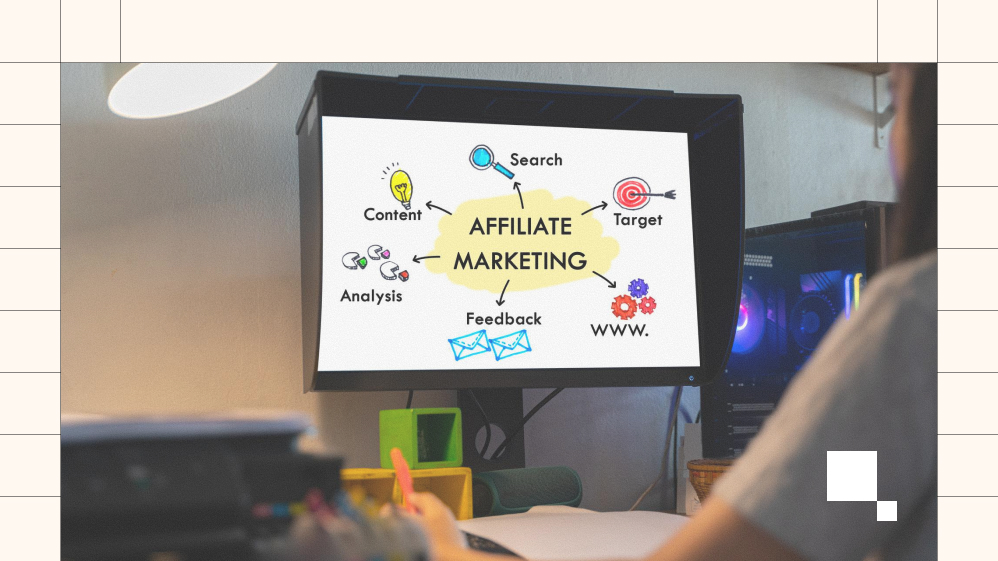
This is where you recommend products and earn a cut when someone buys through your link. Amazon Associates is the classic starting point because almost everyone already shops there, and the application process is simple.
The commission rates vary a lot by category, though. To clarify, physical goods often fall in the 1% to 4.5% range, while a handful of categories, like Amazon Games, pay closer to 20%.
The “shopping cart effect” is worth knowing: if someone clicks your link and buys anything within the cookie window, even something unrelated to what you recommended, you still get paid on the whole cart.
What It Means In Real Life?
Here’s a scenario that comes up constantly: imagine a beginner who builds a blog reviewing kitchen gadgets. He links a $20 garlic press, expecting small commissions, and is surprised three weeks later to find a $40 commission in his dashboard.
Turns out the reader clicked through for the garlic press, then bought a $700 stand mixer in the same session. That’s the cart effect working in your favor. And it’s also why review bloggers in higher-ticket niches (furniture, electronics, outdoor gear) tend to out-earn bloggers in low-ticket niches even with identical traffic.
The common mistake: Recommending products you’ve never used because they have a high price tag, only to get buried in returns and refund-driven commission clawbacks once people realize the product doesn’t match the review. Trust, once spent, is hard to earn back from the same readers.
A simpler, underrated affiliate path is a blend of software and tools. For instance, web hosting, email marketing platforms, and design tools.
These often pay flat commissions of $50 to $200 per signup rather than a percentage, which is a completely different formula from the Amazon one above. Fewer conversions needed, higher payout per conversion.
Worth weighing both models against your niche rather than assuming Amazon-style percentage affiliate links are the only option.
Sponsored Content: Skipping The Traffic Requirement Entirely

This one surprises beginners: you don’t need huge traffic to land a sponsored post. You need a tightly defined audience that a brand actually wants to reach.
A blog with 3,000 monthly readers who are all new parents researching baby gear is more valuable to a baby-product brand than a general lifestyle blog with 30,000 scattered readers. Brands pay for relevance, not just reach.
The realistic scenario here: a new blogger pitches five companies, hears nothing back from four, and gets one reply offering a free product instead of payment.
This happens to almost everyone early on. The fix that tends to work isn’t pitching more companies.
Rather, it’s pitching smaller, newer brands that have actual marketing budgets but can’t afford influencers with six-figure followings.
Established brands constantly ignore cold pitches from small blogs. Meanwhile, the small or emerging brands are often desperate for exactly this kind of low-cost exposure.
The Mistake To Avoid:
- Agreeing to “exposure” as payment more than once. Exposure doesn’t pay your hosting bill.
- A polite, simple rate card, even a rough one, changes the tone of these conversations from “maybe you’ll throw me something” to “here’s what this costs.”
Digital Products: The Underrated One
This is the platform most beginner-focused content skips. Probably because it requires actually making something rather than just linking to it.
But it’s also where the math gets dramatically better, because you keep nearly all the revenue rather than a small commission.
A simple template, checklist, or short guide priced at $9–$19 doesn’t need huge traffic to add up. If 500 monthly readers convert at just 1%, that’s 5 sales.
At $15 each, that’s $75. Yes, it is not life-changing, but compare that to what 500 readers might generate through display ads alone, and the gap becomes obvious fast.
The scenario that plays out a lot in this space is this: someone spends weeks building an elaborate $97 course before they have any audience to sell it to. Then they sell zero copies, and conclude, “digital products don’t work.”
The far more common success pattern goes the other direction. That’s nothing but a $7 checklist, sold to an audience that already trusts the blogger’s free content, sells a handful of copies in week one.
To sum up, small, cheap, and tested beats big, expensive, and assumed every time.
Affiliate Marketing Beyond Amazon: The Platforms People Skip
Amazon gets all the attention. But a few underrated affiliate routes are worth a beginner’s time. That’s specifically because the payouts per sale are higher and the competition for those programs is thinner:
Software-as-a-service affiliate programs (think project management tools, website builders, finance apps) frequently pay 20–40% recurring commissions. In other words, you get paid every month the customer stays subscribed, not just once.
A single referred customer paying $30/month at a 30% recurring rate pays you $9 every month for as long as they stay. Ten of those and you have a small, predictable monthly floor under your income, which Amazon’s one-time small commissions simply can’t offer.
Course-creator affiliate programs are another quiet earner; many pay 30–50% per sale because there’s no physical inventory cost involved.
Putting It Together: A Beginner’s Realistic Stacking Order
Most successful beginner blogs don’t pick one method. They stack, usually in roughly this order as traffic grows:
Start with one or two affiliate links placed naturally within genuinely useful content. This requires the least traffic to start producing results.
Add a low-cost digital product once you have a small, trusting audience, even a few hundred engaged readers. Apply to an ad network once you clear its entry threshold, since this becomes mostly passive income layered on top of what you’re already doing.
Pursue sponsorships once you have a clearly defined audience a brand can picture and target.
Final Verdict: Follow This Approach To Make Money Faster!
Nobody gets rich from a single ad on a single post. But now you know how do bloggers make money.
The bloggers who eventually make real money are the ones who treat it as stacking small, mismatched income streams on top of each other until the pile adds up. Not the ones who found one secret platform that pays better than the rest.
Pick one method that fits your content right now, get genuinely good at it, and add the next layer once you understand why the first one worked.


Must Read

How to Build a Modern Business Protection Strategy

Popular Street Bikes for Everyday Commuting

Head Of Growth Marketing Responsibilities: A Beginner’s Guide To The Role

How To Build A Growth Marketing Strategy That Actually Works

Growth Marketing For Beginners: A Simple Way To Grow Your Small Business
Most Popular

A Guide For Deductibles and Premiums in Accident Insurance
Financial Survival Tips for Entrepreneurs in Debt
Toronto Car Insurance vs. Other Cities: Why Are Rates So High?

The Future of MENA Businesses: Why You Need Both Management & Accounting Software


Leave A Reply