


Reading the Financial Forecast: How Savvy Traders Adapt Before Conditions Change

Traders know one universal truth: Markets never stay still. The landscape can shift from optimism to caution and from growth to retreat faster than most realize. While many participants simply react to these swings, successful traders operate differently. They recognize that market cycles behave like weather systems — constantly evolving, often predictable, and always manageable for those who know how to read the sky.
Understanding the “financial forecast” isn’t about predicting every storm. It’s about interpreting conditions before they develop. When volatility builds or liquidity tightens, traders who’ve learned to anticipate the shift can adjust exposure, protect capital, and find opportunity in the transition. This mindset separates disciplined professionals from those driven by impulse.
A trader’s first line of defense is awareness. The market gives signals long before sentiment changes. Momentum fades, breadth narrows, or volume drops at key levels. These aren’t coincidences; they’re early signs that the weather is shifting. In the same way a meteorologist tracks pressure changes, seasoned traders monitor these cues to prepare, not panic. They refine stop levels, rebalance positions, and build a plan for the phase that’s likely to follow.
Equally important is emotional discipline. Every trader knows the temptation to overtrade during favorable markets or to freeze when conditions deteriorate. But weather and emotion share a pattern: both can cloud judgment. Maintaining focus when the environment turns uncertain is a learned skill. It requires the ability to stay flexible, manage risk without abandoning opportunity, and make decisions based on process rather than prediction.
Preparation also involves strengthening systems, not just strategies. Automated alerts, risk thresholds, and diversified setups act like a financial weather radar. They ensure that when conditions shift suddenly, response time is fast and deliberate. Great traders don’t rely on perfect forecasts; they rely on adaptive frameworks. These frameworks allow them to stay grounded through both tailwinds and turbulence.
Long-term success in trading often comes from this commitment to adaptability. Traders who study how different “climates” affect behavior and performance learn to separate temporary noise from genuine trend shifts. They know when to pull back and when to press forward, and they accept that flexibility is not a weakness but a competitive advantage. Consistency doesn’t come from static rules. It comes from dynamic awareness and the ability to execute calmly in all conditions.
Ultimately, adapting to financial weather is less about reacting to change and more about anticipating it. The traders who thrive are those who treat uncertainty as part of the forecast, not a surprise event. They study the climate, respect its power, and use its rhythm to their advantage.
Just as a skilled navigator adjusts course before a storm, traders who stay alert to subtle market shifts position themselves for the next opportunity while others are still checking the radar.
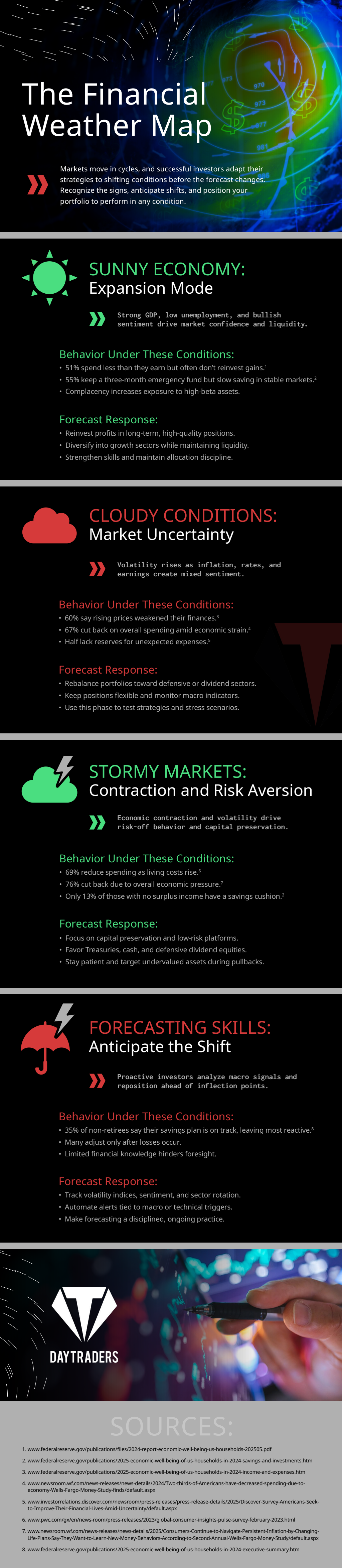
To explore how each phase of the financial forecast shapes strategy and investor sentiment, view the companion infographic from DayTraders, a day trader platform.


Must Read

Is Bankruptcy Right for You? Questions to Ask Before Filing in Georgia

How to Build a Modern Business Protection Strategy

Popular Street Bikes for Everyday Commuting

Head Of Growth Marketing Responsibilities: A Beginner’s Guide To The Role

How To Build A Growth Marketing Strategy That Actually Works
Most Popular

A Guide For Deductibles and Premiums in Accident Insurance
Financial Survival Tips for Entrepreneurs in Debt
Toronto Car Insurance vs. Other Cities: Why Are Rates So High?

The Future of MENA Businesses: Why You Need Both Management & Accounting Software




Leave A Reply