


Clarifying the Consumer Product Order Journey to Improve Responsiveness

As consumer expectations continue to rise, organizations are under pressure to respond to orders quickly and accurately. Yet many businesses struggle to translate demand signals into coordinated action across their operations.
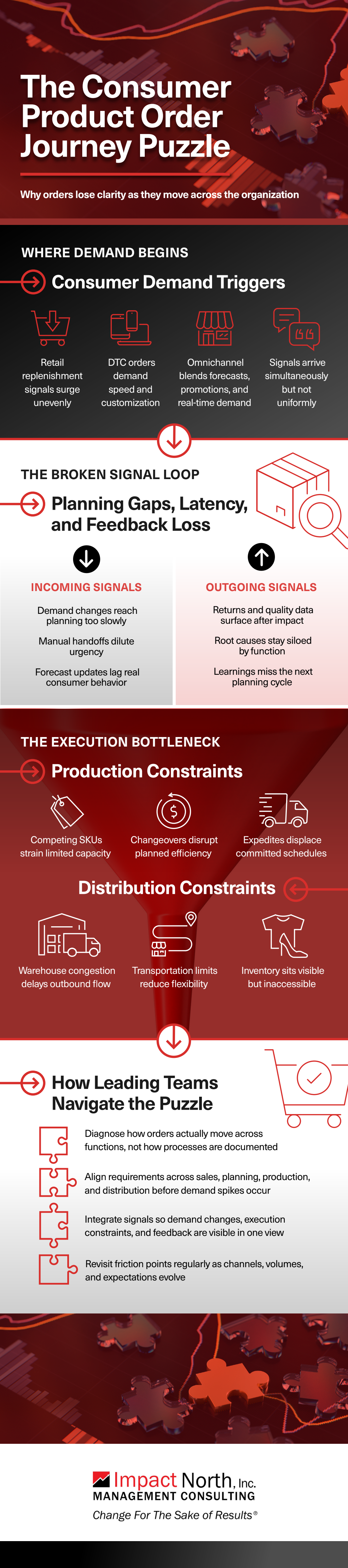
Consumers engage with brands through retail partners, direct channels, and digital marketplaces, creating streams of demand data that are often fragmented. When enterprise systems cannot interpret these signals consistently, gaps emerge between forecasts, plans, and actual orders, slowing response times and reducing visibility across sales, planning, manufacturing, and distribution teams.
Demand today does not follow a single pattern. Retail channels may offer some predictability, while direct to consumer orders demand flexibility and speed. Omnichannel strategies further complicate the picture by introducing frequent changes in pricing, promotions, and inventory availability.
When planning systems are not aligned to account for these variations, organizations end up making decisions based on incomplete or outdated information. As a result, planners may adjust forecasts after shifts have already occurred, limiting their ability to stay ahead of demand.
Internal coordination adds another layer of complexity. When sales, demand planning, and operations operate in silos, changes in priorities often move slowly through informal channels like emails and spreadsheets. This fragmented communication increases the likelihood of errors and makes it harder to track ownership and accountability. Decisions take longer, and teams may act on different versions of the same information.
Fulfillment is where these challenges become most visible. Manufacturing teams must balance capacity limits, changeovers, and competing production priorities, all of which can disrupt schedules.
At the same time, warehouses and logistics teams face constraints related to space, labor availability, and transportation capacity. Without clear, shared visibility across systems, these execution challenges are harder to manage, leading to delays and missed commitments.
Feedback from the field is another area that often falls short. Returns, service issues, and quality concerns hold valuable insights, but when that information does not flow back into planning processes quickly, organizations miss opportunities to adjust. Slow or disconnected feedback loops allow the same assumptions and errors to carry forward into future planning cycles.
Improving responsiveness requires looking at the entire order journey as a connected system. Aligning teams around shared priorities and integrated processes helps reduce friction between functions.
Regularly reviewing how orders move from initial demand through delivery makes it easier to identify bottlenecks and understand their impact on lead times and customer satisfaction. Incorporating real time feedback from quality and service into planning systems also ensures that lessons are captured and applied when they matter most.
Strengthening the consumer product order journey depends on clarity, connectivity, and collaboration. When organizations create a shared view of demand and execution, they are better positioned to respond quickly, adapt to change, and deliver consistent outcomes for customers.
To explore more about how end-to-end visibility shapes modern order management practices, see the accompanying resource from Impact North, a provider of ERP solutions for the oil and gas industry.


Must Read

Is Bankruptcy Right for You? Questions to Ask Before Filing in Georgia

How to Build a Modern Business Protection Strategy

Popular Street Bikes for Everyday Commuting

Head Of Growth Marketing Responsibilities: A Beginner’s Guide To The Role

How To Build A Growth Marketing Strategy That Actually Works
Most Popular

A Guide For Deductibles and Premiums in Accident Insurance
Financial Survival Tips for Entrepreneurs in Debt
Toronto Car Insurance vs. Other Cities: Why Are Rates So High?

The Future of MENA Businesses: Why You Need Both Management & Accounting Software




Leave A Reply