


6 Best Business Budget Management Software Solutions That Actually Help You Control Cash Flow
A lot of businesses think budgeting problems mean, “we need to make more money.” Sometimes that is true.
But honestly, many businesses earning decent revenue still operate chaotically because nobody has real visibility into:
- expenses,
- recurring costs,
- cash flow,
- profit margins,
- software spending,
- project budgets,
- contractor payments, and
- monthly forecasting.
Moreover, this is super common, and it happens constantly in content businesses, guest posting operations, affiliate websites, ecommerce brands, SaaS startups, and small digital businesses.
Money comes in. Money goes out. And eventually, somebody opens the banking dashboard, wondering, “Where did all of it go?”
That is usually when business budget management software enters the conversation because spreadsheets eventually become painful once:
- expenses multiply,
- teams grow,
- subscriptions pile up,
- clients’ scale, and
- revenue becomes inconsistent.
And digital businesses especially tend to accumulate financial chaos quietly over time.
What Is Business Budget Management Software?

Business budget management software helps companies to:
- track income,
- monitor expenses,
- manage budgets,
- forecast cash flow,
- organize financial reporting,
- control spending, and
- improve financial visibility.
Instead of manually tracking everything through disconnected spreadsheets and bank statements.
Moreover, while some tools focus heavily on accounting, bookkeeping, and invoicing, others focus more on forecasting, budgeting, expense control, financial planning, and operational visibility.
TBH, the right option depends heavily on how the business actually operates.
Most Businesses Do Not Need Enterprise Finance Systems:
So, a lot of software companies market budget tools like every business operates a multinational corporation with 17 finance departments.
Meanwhile, many digital businesses simply need expense visibility, profit tracking, recurring cost monitoring, cash flow forecasting, and simple reporting, especially in content-site businesses.
This is because content businesses often have irregular financial structures, including:
- freelance writers,
- outreach costs,
- guest posting budgets,
- SEO tools,
- software subscriptions,
- hosting expenses,
- affiliate payouts,
- ad spend, and
- contractor payments.
Also, without organization, profitability becomes surprisingly hard to measure accurately.
Why Budget Management Becomes Critical As Businesses Scale?
In smaller businesses, owners often track finances mentally, and that works temporarily.
Then suddenly, there are 30 software subscriptions, multiple team members, recurring contractor invoices, advertising costs, hosting upgrades, affiliate commissions, outsourced operations, and more.
Now, money starts leaking everywhere quietly.
And honestly, recurring digital expenses are dangerous because they feel small individually but become enormous collectively, especially in online businesses where subscriptions multiply constantly.
As a result, a budget management software can help businesses finally see:
- Where does money go?
- Which costs are unnecessary?
- Which projects remain profitable?
- How does cash flow change monthly?
Remember, it is visibility that can alone fix a surprising amount of financial chaos.
The Best Business Budget Management Software In The Market Now:
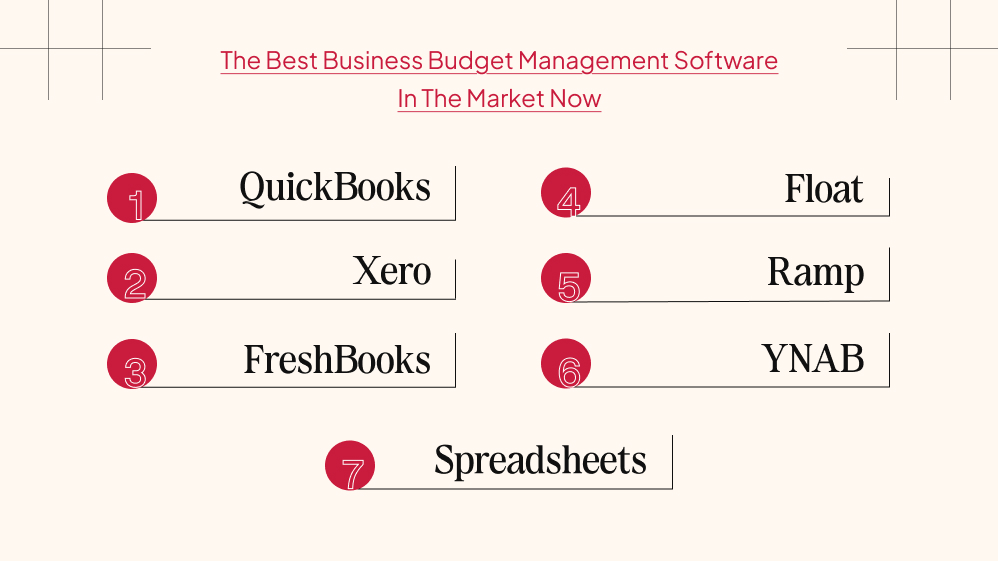
So without wasting time, let’s check out the best business budget management software in the market in 2026.
1. QuickBooks Remains One Of The Most Common Choices:
Intuit’s QuickBooks still dominates small business finance for a reason.
So, it handles budgeting, expense tracking, invoicing, reporting, payroll integrations, tax preparation, and cash flow monitoring.
Moreover, honestly, many businesses choose it simply because accountants already understand it.
That matters more than people realize, especially once taxes, contractors, and reporting become more complicated.
Also, for digital businesses managing multiple clients, contractors, and recurring operational costs, QuickBooks usually covers most operational budgeting needs reasonably well.
The downside: it can feel bloated for smaller creators or solo operators.
2. Xero Is Popular With Online Businesses:
Xero became especially popular among remote businesses, agencies, freelancers, and international teams.
Partly because the interface feels cleaner and more modern than traditional accounting software.
Moreover, Xero handles:
- budgeting,
- bank reconciliation,
- invoicing,
- reporting,
- expense tracking, and
- project cost visibility.
Also, many digital business owners prefer its usability over older accounting systems, especially if they hate overly corporate financial dashboards.
3. FreshBooks Works Well For Service Businesses:
FreshBooks focuses heavily on invoicing, client billing, expense tracking, project-based budgeting, and freelancer workflows, which makes it useful for:
- agencies,
- consultants,
- writers,
- service providers, and
- smaller digital businesses.
Moreover, it is less “finance department software” and more “practical operational finance management.”
Also, for content businesses managing retainers, recurring clients, and contractor expenses, that simplicity can actually become an advantage.
4. Float Helps With Cash Flow Forecasting:
A lot of businesses do not fail because revenue disappears. Instead, they fail because cash flow timing becomes chaotic.
This is where Float comes in to save the day. It focuses heavily on cash flow forecasting, budgeting visibility, financial projections, and scenario planning.
This, in turn, becomes extremely useful for businesses dealing with:
- irregular income,
- advertising fluctuations,
- seasonal revenue,
- affiliate payments, and
- delayed invoices.
Also, honestly, forecasting becomes more important once businesses scale beyond survival mode because profitability and cash flow are not always the same thing.
5. Ramp Became Popular For Expense Control:
Ramp focuses heavily on corporate spending, expense management, finance automation, subscription tracking, and operational visibility, especially for startups and growing teams.
One huge problem in digital businesses is that nobody notices recurring software waste until it becomes massive.
This is where Ramp can help businesses identify duplicate subscriptions, unnecessary spending, and uncontrolled operational costs.
That visibility alone can save substantial money yearly.
6. YNAB Surprisingly Helps Some Small Business Owners Too:
YNAB (You Need A Budget) is technically personal budgeting software, but many solo entrepreneurs and small creators still use it operationally.
This is especially true for bloggers, freelancers, independent creators, and affiliate marketers because YNAB forces intentional spending decisions instead of passive expense accumulation.
Moreover, for solo operators managing content income, guest posting revenue, and fluctuating affiliate earnings, that mindset can actually work surprisingly well.
7. Spreadsheets Still Work Longer Than People Admit:
This also needs saying.
Not every business immediately needs expensive software stacks. Some smaller businesses genuinely operate fine through Google Sheets, Excel, Airtable, and Notion dashboards.
This is especially true if revenue remains manageable, operations stay simple, and expenses are limited.
The problem starts once financial complexity grows faster than organizational systems. That is usually when manual tracking becomes risky.
Features That Actually Matter In Budget Management Software:
A lot of businesses choose software emotionally based on dashboards instead of practical workflow needs.
As a result, what usually matters most includes:
- cash flow visibility,
- expense categorization,
- recurring cost tracking,
- forecasting,
- reporting clarity,
- bank integrations,
- collaboration,
- automation, and
- budgeting flexibility.
TBH, simplicity matters more than businesses admit. A complicated finance platform nobody consistently uses becomes useless very quickly.
Content Businesses Have Unique Budget Problems:
Content businesses often operate differently from traditional businesses because spending becomes fragmented across:
- writers,
- editors,
- outreach,
- hosting,
- SEO tools,
- backlinks,
- guest posting,
- design,
- AI tools,
- email software, and
- subscriptions.
Also, many online businesses gradually lose profitability due to operational creep.
Tiny recurring costs everywhere – One more tool, one more subscription, and one more platform upgrade.
Eventually, margins quietly shrink. Budget management software helps expose those leaks clearly.
Which Is The The Best Budget Software?
It is the one you actually use consistently. This sounds simple, but it matters enormously.
Some businesses buy overly advanced financial systems and stop updating them consistently within two months.
Now the dashboards become inaccurate anyway. Moreover, the best budgeting system is usually understandable, maintainable, easy to update, and operationally realistic.
Consistency matters more than financial sophistication initially, especially for growing online businesses.
Find The Best Business Budget Management Software!
It depends heavily on business size, operational complexity, team structure, cash flow volatility, reporting needs, and financial goals.
But for most digital businesses, the real goal is not building a giant finance department.
Moreover, it is about gaining enough financial visibility to control spending, protect margins, forecast cash flow, and avoid operational chaos.
The point? To understand where the business actually makes money, because honestly, many businesses do not have revenue problems first – instead, they have visibility problems.


Must Read

Is Bankruptcy Right for You? Questions to Ask Before Filing in Georgia

How to Build a Modern Business Protection Strategy

Popular Street Bikes for Everyday Commuting

Head Of Growth Marketing Responsibilities: A Beginner’s Guide To The Role

How To Build A Growth Marketing Strategy That Actually Works
Most Popular

A Guide For Deductibles and Premiums in Accident Insurance
Financial Survival Tips for Entrepreneurs in Debt
Toronto Car Insurance vs. Other Cities: Why Are Rates So High?

The Future of MENA Businesses: Why You Need Both Management & Accounting Software


Leave A Reply